.webp)
How often Should Facility Managers Schedule Facade Inspections
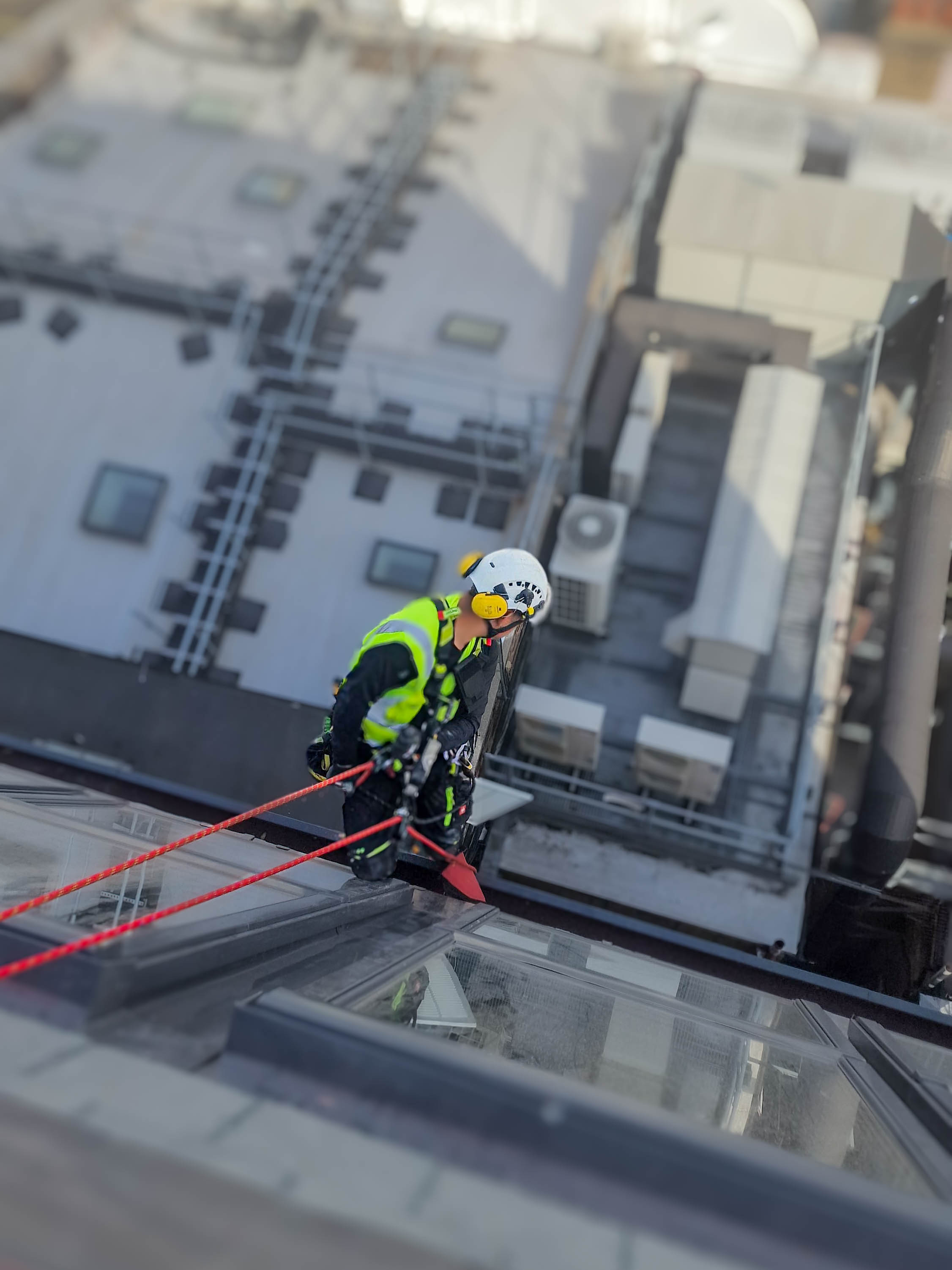
Table of Content
Introduction
Most people walk past buildings without ever noticing the finer details. But once you’ve spent time on façade repairs and inspections, you start spotting problems everywhere. Take any street in London and there’s a good chance you’ll find cracked stonework, loose panels, or water stains. small issues that could have been prevented with proper upkeep. But beyond aesthetics, that exterior shell is doing a lot of heavy lifting: protecting occupants from the weather, shielding structural elements, and keeping your asset compliant and safe. For facility managers, the façade isn’t just decoration.
And here’s the uncomfortable truth: façades don’t fail overnight. They deteriorate slowly and silently. A small crack lets in moisture. A loose panel shifts in high winds. Minor neglect today can turn into major repair further down the line. That’s why regular façade inspections are not optional.
But how often should they be scheduled? And more importantly, what’s the best way to inspect a façade in a cost effective, reliable manner? Let’s explore.
Why Façade Inspections Matter More Than You Think
Safety First
Falling materials are a real danger. they’re a genuine safety hazard. In the UK, incidents of loose masonry, tiles, or cladding causing injuries or damage. they’re a genuine safety hazard. In the UK, incidents of loose masonry, tiles, or cladding causing injuries or leading to emergency For facility managers, this risk carries both moral and legal weight: under health and safety regulations, building owners are required to maintain structures in a safe condition, with failures potentially resulting in fines, lawsuits, or even criminal charges. Add to that the reputational damage of being linked to an unsafe building, and it’s clear that façade inspections are far more than just for aesthetics. They’re a vital safeguard against risk, liability, and costly emergency repairs in a climate where unpredictable UK weather only accelerates deterioration.
Compliance and Regulation
Compliance with façade regulations is essential for any facility manager. Failure to follow the rules can lead to heavy fines, legal action, or restrictions on how a building is used. Local authorities have the power to step in if a façade is deemed unsafe, and once that happens the costs and disruption are far greater than the price of routine inspections. Staying compliant also provides clear evidence that the building is being managed properly, which can be vital when dealing with insurers, tenants, or future buyers.
Moral Argument
Façade inspections are ultimately about protecting people and their possessions. A damaged or poorly maintained façade can put tenants and members of the public at risk, whether through falling materials or water damage that spreads inside a building. Choosing to cut corners or delay inspections might save money in the short term, but it puts safety on the line. Putting people at risk to reduce costs is morally wrong, and no responsible facility manager wants to be in that position. Regular inspections are a simple way to show that safety and care come before cost cutting.
The Tools of the Trade: Different Ways to Inspect
There are several ways to carry out a façade inspection, and the right choice depends on the building and the task at hand. The most common methods include rope access, mobile elevating work platforms (MEWPs), and drones. Each plays an important role in modern building maintenance
Industrial Rope Access
Rope access is often the best tool for façade inspections because it combines flexibility, safety, and efficiency. Technicians can reach almost any part of a building without the need for bulky equipment or disruptive scaffolding, making it ideal for complex structures or sites with limited access. It also allows inspectors to get close to the surface, giving them a clear view of even small defects that might be missed by other methods. With lower setup costs and minimal disruption to building users, rope access is a reliable and cost effective choice for facility managers who want detailed, hands-on inspections.
Pros:
- Unmatched flexibility, rope access can reach areas scaffolding or machinery can’t.
- Cost-effective compared to erecting scaffolding.
- Quick setup means less disruption to occupants.
Cons:
- Work is weather-sensitive; high winds or rain can halt progress.
- Limited ability to carry heavy equipment.
- Requires highly trained specialists.
MEWPs (Mobile Elevating Work Platforms):
MEWPs are a practical choice for façade inspections when stability and extended access are needed. They provide a secure platform that allows inspectors to work with tools, equipment, or testing devices that might be difficult to handle while using rope access. MEWPs are particularly useful for mid rise buildings or areas where repeated access is required, as they allow for longer periods of inspection without the need for constant repositioning. Although they require space at ground level and can be limited by site restrictions, they remain a reliable option for thorough inspections where precision and safety are a priority.
Pros:
- Safe and steady, giving inspectors freedom to use advanced equipment.
- Faster setup than scaffolding.
- They can be in position for longer than rope access.
Cons:
- Needs significant ground space, not always available in crowded city sites.
- Limited reach on very tall buildings.
- Hiring costs can add up for repeated inspections.
Drone surveys
Drones have become an increasingly popular tool for façade inspections thanks to their speed and versatility. They allow inspectors to capture high resolution images and video of difficult to reach areas without the need for scaffolding, rope access, or heavy machinery. This makes them especially useful for initial surveys, large sites, or locations where access is restricted. Drones can quickly highlight problem areas that need closer investigation, saving both time and money in the early stages of inspection. While they cannot replace the detail of a hands-on approach, drones are a powerful first step in any modern façade inspection strategy.
Pros:
- Extremely quick deployment.
- Excellent for tall or complex façades.
- Non-intrusive, minimising disruption to tenants.
Cons:
- Can’t perform hands on testing or repairs.
- Heavily regulated in some regions (permissions required).
- Weather sensitive.
The Power of a Condition Survey
So why not just do the bare minimum?
Instead of a quick once over, a condition survey brings together inspection methods, expert analysis, and detailed reporting. It’s not just about spotting problems, it’s about planning strategically.
Key Benefits
- Early Intervention – A crack identified today might cost £500 to seal. Left unchecked, it could cost £50,000 in structural repairs five years later.
- Budget Control – Knowing what’s coming allows you to spread costs over time instead of absorbing one massive hit.
- Asset Longevity – Extend the lifespan of cladding, sealants, and glazing systems by addressing issues early.
- Risk Reduction – Prove due diligence, reduce liability, and protect your reputation.
The Financial Case
Industry studies show that planned maintenance can reduce lifetime costs of building ownership by up to 30% compared to reactive maintenance. For large commercial portfolios, that’s not just savings — that’s millions back in your budget.
How Often Should You Inspect?
While regulations vary, here are some practical benchmarks:
- Annual visual checks – Quick, routine inspections to catch obvious issues.
- 3–5 year condition surveys – In-depth, documented surveys that form the basis of long-term planning.
- Event-based inspections – After severe storms, earthquakes, or unusual structural movement.
If your building is in a high-pollution environment, near the coast, or exposed to extreme weather, you’ll need inspections more frequently.
The Smart Facility Manager’s Approach
The most effective facility managers don’t view façade inspections as a box-ticking exercise. They view them as a strategic tool.
- Use drones for initial assessments and annual checks.
- Deploy rope access or MEWPs for hands on surveys.
- Commission a full condition survey every few years to stay ahead of issues.
By blending these approaches, you’ll keep costs manageable, maintain safety, and maximise asset value.
Final Thoughts
The façade is your building’s first impression, but also its also the structure of the entire building. For facility managers, regular inspections aren’t just a duty they’re a smart investment.
Whether it’s rope access, MEWPs, drones, or a mix of all three, the right inspection strategy gives you the foresight to plan, the data to budget, and the confidence to know your building is safe and compliant.
So here’s the big question: when is your next façade inspection scheduled?